

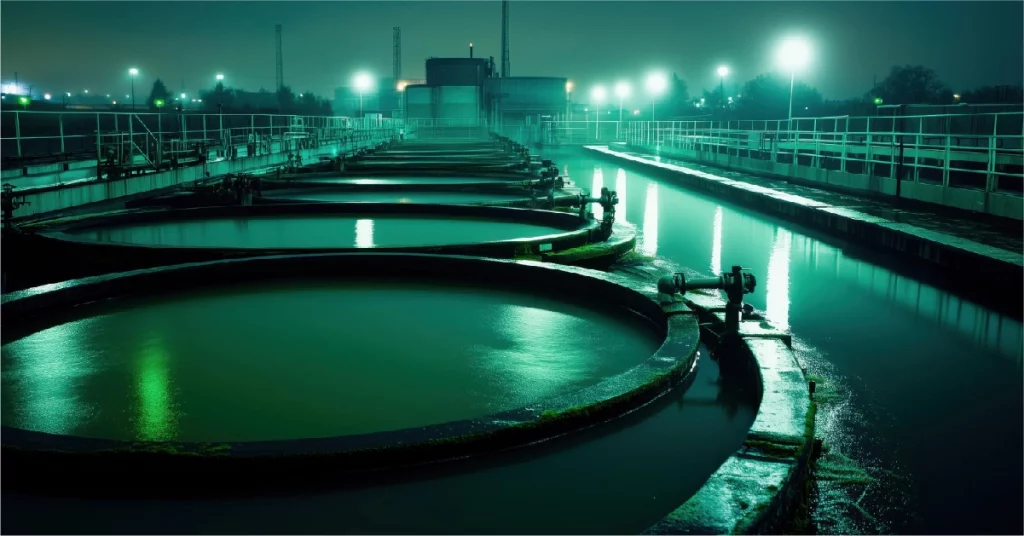
Large-scale developments require sewage treatment systems that can handle significant wastewater volumes while maintaining reliable treatment performance. As communities and infrastructure expand, existing sewage treatment capacity may also need to scale with demand.
For projects such as NEOM in Saudi Arabia, high-capacity sewage treatment plants are an important part of managing wastewater and supporting sustainable water use.
Ion Exchange has supplied a 1,350 m³/day sewage treatment plant for NEOM, Saudi Arabia, demonstrating its capability to deliver large-scale sewage treatment infrastructure for major developments.
Why Sewage Treatment Capacity Matters in Saudi Arabia?
Saudi Arabia’s climate and limited freshwater resources make effective wastewater management particularly important.
Large residential, commercial, and infrastructure developments generate substantial volumes of sewage that require reliable treatment before discharge or reuse.
As wastewater volumes increase, sewage treatment systems need to provide:
- Adequate treatment capacity
- Consistent treated-water quality
- Reliable operation
- Efficient use of available space
- Potential for treated-water reuse
A properly planned sewage treatment plant in Saudi Arabia can therefore form an important part of a development’s overall water-management strategy.
What Is a High-Capacity Sewage Treatment Plant?
A high-capacity sewage treatment plant is designed to process large volumes of domestic sewage while achieving the required treated-water quality.
The actual treatment configuration depends on:
- Daily sewage flow
- Peak flow variations
- Influent characteristics
- Required treated-water quality
- Available footprint
- Reuse requirements
- Applicable environmental requirements
Capacity should be determined not only by current wastewater generation but also by expected future demand where expansion is anticipated.
How Sewage Treatment Plants Treat Wastewater?
A typical STP combines several treatment stages.
-
Preliminary Treatment
Screens and other preliminary processes remove larger solids and debris from incoming sewage.
-
Primary Treatment
Sedimentation allows settleable solids to separate from the wastewater, reducing the load on downstream treatment.
-
Biological Treatment
Microorganisms break down biodegradable organic matter in the sewage.
Depending on the application, biological treatment can use technologies such as:
- Activated sludge
- MBBR
- SBR
- MBR
-
Tertiary Treatment
Additional filtration and disinfection may be incorporated where higher-quality treated water is required for discharge or reuse.
The treatment stages are configured according to the required output quality and intended application.
When Does an STP Need Capacity Enhancement?
Capacity enhancement may need to be evaluated when wastewater generation increases beyond the plant’s existing design capacity.
This can happen because of:
-
Population Growth
New residents, employees, or visitors increase sewage generation.
-
Infrastructure Expansion
Additional residential, commercial, hospitality, or institutional facilities can increase wastewater flows.
-
Higher Peak Flows
Seasonal or daily variations can create peak loads that place pressure on existing treatment systems.
-
Water Reuse Requirements
Where more treated wastewater needs to be recovered and reused, additional treatment capacity or advanced polishing may be required.
A capacity assessment should therefore consider both average and peak wastewater flows before deciding whether an existing plant needs modification, expansion, or replacement.
Technologies for Sewage Treatment Capacity Enhancement
The right technology depends on the site’s wastewater characteristics, capacity requirement, footprint, and treated-water quality target.
-
MBBR
Moving Bed Biofilm Reactor technology uses attached-growth media to support biological treatment and can provide additional biological treatment capacity within a compact configuration.
-
SBR
Sequencing Batch Reactor technology performs biological treatment and settling in batches, allowing the process to be configured around varying wastewater loads.
-
MBR
Membrane Bioreactor technology combines biological treatment with membrane filtration to produce high-quality treated water.
MBR can be particularly useful where space is constrained or where treated water needs to meet higher-quality reuse requirements.
Ion Exchange’s solution portfolio identifies MBR/MBBR systems as suitable for space-constrained sites, with modular and scalable deployment.
Factors to Consider Before Increasing STP Capacity
A sewage treatment plant capacity enhancement project should begin with a technical assessment of the existing and future requirements.
-
Existing Capacity
Determine the plant’s current design and actual operating capacity.
-
Future Wastewater Generation
Population, occupancy, infrastructure expansion, and projected water consumption should be considered when estimating future sewage flows.
-
Peak Flow
The system should be able to manage peak hydraulic loads without compromising treatment performance.
-
Available Space
Where additional land is limited, compact and modular treatment technologies may be considered.
-
Required Treated-Water Quality
The intended use of treated water determines whether conventional secondary treatment is sufficient or advanced tertiary treatment is required.
-
Reuse Requirements
If treated sewage is intended for reuse, the treatment system should be designed around the quality required for the specific application.
High-Capacity Sewage Treatment Solutions for Saudi Arabia
A large sewage treatment system must balance capacity, treatment performance, footprint, reliability, and long-term operating requirements.
For developments in Saudi Arabia, the treatment strategy may also need to account for the region’s water-scarce environment and opportunities to reuse treated wastewater.
Potential reuse applications can include:
- Landscaping
- Irrigation
- Flushing
- Utilities
- Selected non-potable applications
The appropriate reuse application depends on the treated-water quality and applicable requirements.
Ion Exchange Sewage Treatment Solutions for NEOM
Ion Exchange provides sewage treatment solutions for large-scale developments, including campuses and townships, with STP capacities in its solution portfolio ranging from 10 to 10,000 m³/day. Its portfolio also includes MBR/MBBR systems for space-constrained sites, with modular and scalable deployment.
For NEOM, Ion Exchange has supplied a 1,350 m³/day sewage treatment plant, demonstrating its capability to execute high-capacity sewage treatment projects in Saudi Arabia.
Ion Exchange’s broader sewage-treatment capabilities include biological and membrane-based solutions, allowing systems to be selected according to capacity, site conditions, treatment requirements, and reuse objectives.
Why Choose Ion Exchange for Sewage Treatment in Saudi Arabia?
Ion Exchange brings more than 60 years of water and wastewater treatment experience and has a global sales, production, and service footprint. Its Saudi presence includes an assembly facility, supporting its ability to serve regional requirements.
Its capabilities cover:
- Sewage treatment plants
- Industrial wastewater treatment
- MBR and MBBR systems
- Water recycling and reuse
- Advanced water treatment
- Engineering and project execution
- Operation and maintenance
This integrated capability allows sewage treatment projects to be considered as part of a broader water-management strategy rather than as standalone wastewater infrastructure.
Conclusion
Increasing wastewater generation requires sewage treatment infrastructure that can scale with the needs of large developments.
A successful sewage treatment plant capacity enhancement strategy should consider current and future flows, peak loads, available space, treatment technology, treated-water quality, and reuse requirements.
Ion Exchange’s 1,350 m³/day NEOM sewage treatment plant demonstrates its capability to deliver high-capacity sewage treatment infrastructure in Saudi Arabia.
Connect with Ion Exchange experts to assess your sewage treatment capacity requirements and develop high-capacity STP solutions for developments in Saudi Arabia.
FAQs
-
What is sewage treatment plant capacity enhancement?
It involves increasing or optimising an existing sewage treatment system so it can manage higher wastewater flows while maintaining the required treatment performance.
-
What factors determine STP capacity?
STP capacity depends on daily and peak sewage flows, population or occupancy, wastewater characteristics, future expansion, treated-water quality requirements, and reuse objectives.
-
What technologies can support STP capacity enhancement?
Depending on site requirements, technologies such as MBBR, SBR, and MBR can be considered for biological treatment and capacity optimisation.
-
What is the capacity of Ion Exchange’s NEOM sewage treatment plant?
Ion Exchange has supplied a 1,350 m³/day sewage treatment plant for NEOM, Saudi Arabia.
-
Can treated sewage be reused in Saudi Arabia?
Yes. Depending on the treatment quality and applicable requirements, treated sewage can be considered for suitable non-potable applications such as landscaping, irrigation, flushing, and utilities.