

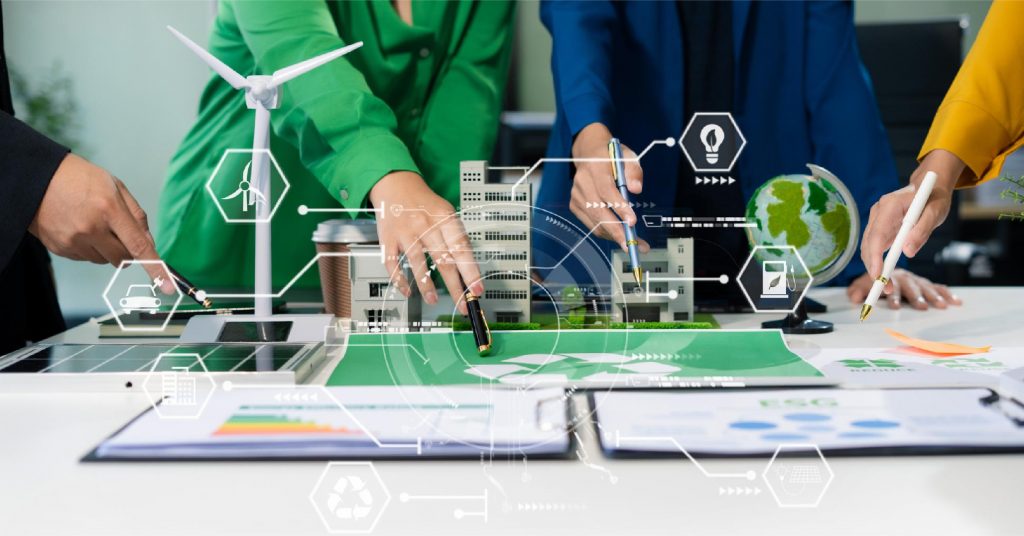
Saudi Arabia is rapidly expanding its infrastructure, industrial capacity, and environmental initiatives under Vision 2030. As major projects in water, renewable energy, waste management, and industrial utilities scale up, EPC project management has become a cornerstone of successful execution. Delivering sustainability-focused projects requires precision engineering, cost-efficient procurement, and flawless construction — all handled under tight timelines and stringent environmental standards.
This is why EPC models are increasingly preferred by government bodies, industrial developers, and large private companies across the Kingdom.
What Is EPC in Project Management?
Understanding what EPC in project management is essential for organisations embarking on large-scale sustainable infrastructure programmes.
EPC stands for:
- Engineering – detailed design, technical planning, and process engineering
- Procurement – sourcing all equipment, materials, and technologies
- Construction – building, installing, and commissioning the project
A single EPC contractor is accountable for delivering the project from concept to handover. This turnkey responsibility reduces complexity for clients and ensures predictable outcomes — especially critical for sustainable water, energy, and industrial projects in Saudi Arabia.
Why EPC Project Management Is Crucial for Sustainability?
Saudi Arabia is embracing sustainability through renewable energy expansions, wastewater recycling, desalination upgrades, and industrial optimisation. EPC-led execution supports these goals by offering:
1. End-to-End Accountability
With one contractor managing the entire lifecycle, design decisions align seamlessly with procurement and construction expectations — reducing delays and rework.
2. Efficient Procurement for Green Technologies
Sustainable projects require specialised equipment such as:
- High-efficiency pumps
- Low-energy desalination solutions
- Advanced wastewater reactors
- Automated monitoring systems
EPC models ensure these are sourced, integrated, and commissioned correctly.
3. Faster Project Delivery
Saudi Arabia’s rapid industrial and municipal growth demands fast deployment. EPC teams streamline engineering workflows and shorten execution timelines.
4. Assurance of Compliance & Quality
Sustainability-driven projects must meet stringent Saudi environmental and safety codes. EPC contractors help maintain alignment with regulatory frameworks.
Key Applications of EPC in Project Management Across Saudi Arabia
EPC frameworks are especially valuable in sectors undergoing sustainability transformations:
1. Desalination & Water Reuse Projects
EPC teams design and deliver complete RO, UF, and hybrid desalination systems with modern automation and energy recovery technologies.
2. Wastewater Treatment & Industrial Effluent Plants
Advanced MBR, ZLD, and resource-recovery systems require integrated engineering and construction expertise.
3. Renewable Energy & Green Hydrogen Infrastructure
Large solar PV parks, battery storage, and hydrogen production units depend on turnkey EPC models for reliability.
4. District Cooling & Utility Optimisation
Energy-efficient cooling plants and infrastructure upgrades benefit from cohesive engineering-to-construction delivery.
EPC Project Risk Management: The Backbone of Successful Execution
Large infrastructure projects face numerous risks — technical, financial, regulatory, and operational. Effective EPC project risk management ensures that these risks are anticipated and mitigated early.
Key risks and mitigation strategies include:
1. Technical Risks
Involves process design, technology selection, and integration.
Mitigation: early modelling, pilot testing, and HAZOP studies.
2. Procurement Risks
Delays, cost escalations, or supply chain disruptions.
Mitigation: qualified vendor networks, framework contracts, and proactive logistics planning.
3. Construction Risks
Site challenges, safety issues, and climate considerations.
Mitigation: phased construction, stringent HSE management, and experienced EPC teams.
4. Regulatory Risks
Compliance with Saudi Arabia’s environmental and sustainability standards.
Mitigation: early approvals, continuous monitoring, and design aligned with regulatory updates.
5. Financial Risks
Cost overruns and funding constraints.
Mitigation: integrated planning and value engineering.
With structured risk management, EPC contractors deliver projects with fewer delays, higher reliability, and predictable budgets — vital for sustainability-driven investments.
Integrated Environmental Infrastructure Solutions by Ion Exchange
From total water to entire environment solutions, for every sector – industrial, institutional, infrastructure, municipal, and household, urban and rural. And now embarking on turnkey projects for industrial and municipal infrastructure.
While strengthening our dominance in total water management, Ion Exchange (India) Ltd., and joint venture Ion Exchange Waterleau Ltd., now provide integrated environment management that spans water, liquid and gaseous effluents, solid waste, and recovery of energy from waste. And, recently established subsidiary Ion Exchange Infrastructure Ltd. offers specialist design, engineering, and construction services for large infrastructural and environmental projects.
Together, bringing full spectrum capability for undertaking turnkey contracts on EPC and BOO/T basis, for industrial, municipal, and infrastructure development projects.
This issue spotlights recent contracts for industrial and municipal infrastructure.
Turnkey Projects on EPC & BOO/T
- Water Supply Schemes & Distribution Systems
- Sewage Treatment & Disposal Systems
- Waste Water Recycling
- Sea Water Intake & Desalination
- Pumping Stations & Pipeline Projects
- Solid Waste Management
- Waste-to-Energy Projects
- Industrial Utility Complexes
- O&M Services
Why EPC Delivery Aligns with Saudi Arabia’s Vision 2030?
Saudi Arabia is targeting a future defined by efficiency, environmental stewardship, and technological advancement. EPC-led execution supports these strategic goals by enabling:
- Adoption of modern, energy-efficient solutions
- Faster deployment of sustainable utilities
- Resource optimisation across industries
- High reliability and long-term operational stability
- Lower lifecycle costs through smart engineering
These advantages make EPC models the preferred approach for water treatment plants, renewable energy assets, waste-to-resource systems, industrial utilities, and environmental projects across the Kingdom.
Conclusion
EPC project management has become an essential enabler of large-scale sustainable development in Saudi Arabia. By integrating engineering, procurement, and construction under one accountable framework, EPC teams deliver faster, safer, and more reliable infrastructure — fully aligned with national sustainability targets.
Connect with Ion Exchange experts to explore EPC-led solutions engineered for Saudi Arabia’s next-generation sustainable projects.